Azure IoT Operations: Microsoft Fabric RTI Eventstream dataflow

Azure IoT Operations is the new Edge platform for IoT, part of Azure IoT vNext (Next to the MQTT support for Azure EventGrid namespaces and Microsoft Fabric Real-Time Intelligence).

Just one week ago during the Ignite event, Microsoft announced that Azure IoT Operations is now generally available.

In the previous post, we saw how to attach real industrial hardware running on the local network to the Azure IoT Operations solution via the local MQTT broker.

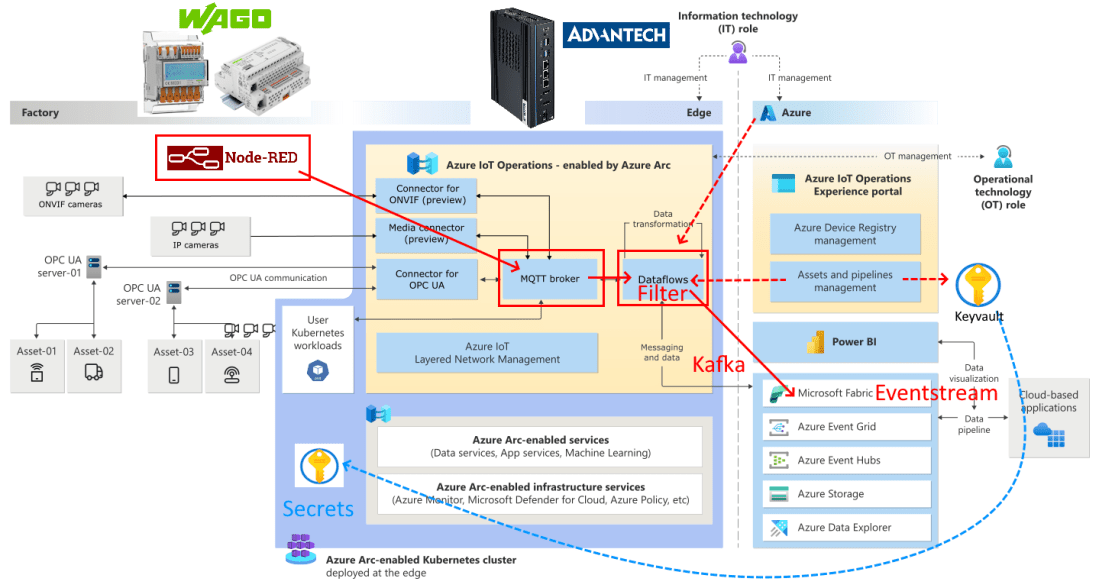
In this blog post, we look at how that telemetry, arriving at the local MQTT broker can be forwarded to the cloud, especially the Real-Time Intelligence part of Microsoft Fabric, including extra transformations.

Doorgaan met het lezen van “Azure IoT Operations: Microsoft Fabric RTI Eventstream dataflow”
Azure IoT Operations: (in)secure MQTT broker authentication

During this Microsoft Ignite event, Microsoft launched Azure IoT Operations.

Azure IoT Operations is the new Edge platform for IoT, part of Azure IoT vNext (Next to the MQTT support for Azure EventGrid namespaces and Microsoft Real-Time Intelligence).

It includes an industrial-grade, edge-native MQTT broker that powers event-driven architectures for internal Kubernetes and local network communication.

In this blog post, we will look at the local MQTT broker part of Azure IoT Operations and how we can manage the authentication of clients, both with and without security.

Doorgaan met het lezen van “Azure IoT Operations: (in)secure MQTT broker authentication”

Microsoft Ignite 2024, IoT related sessions and more

Next week, the Microsoft Ignite event will take place in Chicago (sold out) from November 19 to November 22, 2024,

For those not able to travel to Chicago, you can watch most of the sessions, online, for free:

I’m especially interested in the new Fabric Real-Time Intelligence announcements and the sessions about Azure IoT Operations, the new IoT Edge solution.

In this post, I will share some sessions related to IoT, edge, Real-Time Intelligence and more.

Doorgaan met het lezen van “Microsoft Ignite 2024, IoT related sessions and more”

FutureTech 2025 event, Call for Papers

The CFP for the FutureTech 2025 that will take place on March 13, 2025 is now open (until February 1, 2025).

For the 6th edition of the FutureTech we are looking for the best of the best speakers once again!

Learn about the event and how you can submit your sessions.

Doorgaan met het lezen van “FutureTech 2025 event, Call for Papers”

Running EFLOW with a fixed IP address

Azure IoT Edge is a well-known, free, and trusted platform for running edge computing power in various places like factories, vehicles, remote locations, etc.

Normally, I demonstrate Azure IoT Edge on hosts running Linux like a Ubuntu LTS version.

Microsoft also offers Azure IoT Edge, which runs on a Windows host, like Windows IoT Enterprise.

This is called EFLOW, Edge for Linux on Windows.

Then Azure IoT Edge is deployed on a VM in Hyper-V, running Mariner Linux.

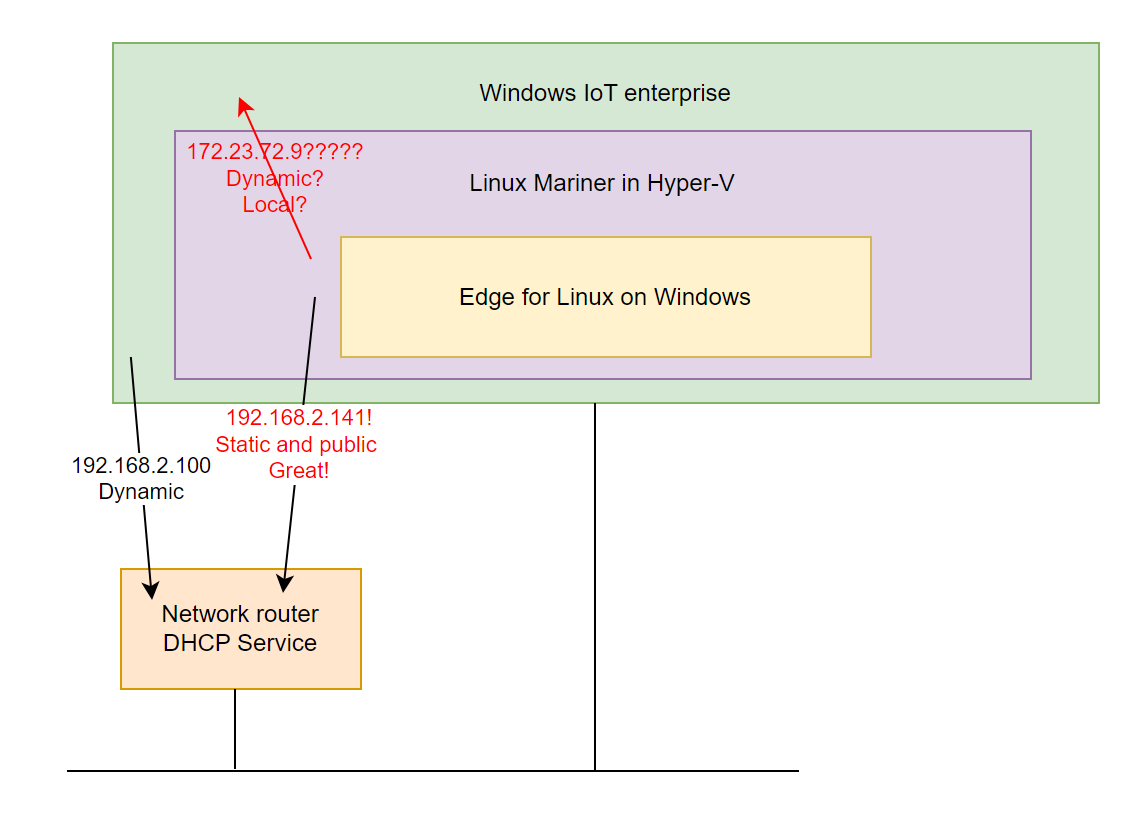
Unfortunately, by default, a dynamic IP address is offered that is created within Hyper-V:

Then problems occur if you want to expose websites or (web) servers running in Docker within EFLOW. IP addresses can change or even are not accessible outside the Windows host. This is not a ruggedized solution.

Let’s check out how we can configure the EFLOW solution using a fixed IP address, which is part of the same DHCP router as seen on the local network used by the Windows host.

Doorgaan met het lezen van “Running EFLOW with a fixed IP address”